
Reviewed · COMMUNIST & YUGOSLAV HISTORY TOURS
NATO Bombing of Belgrade Private Tour
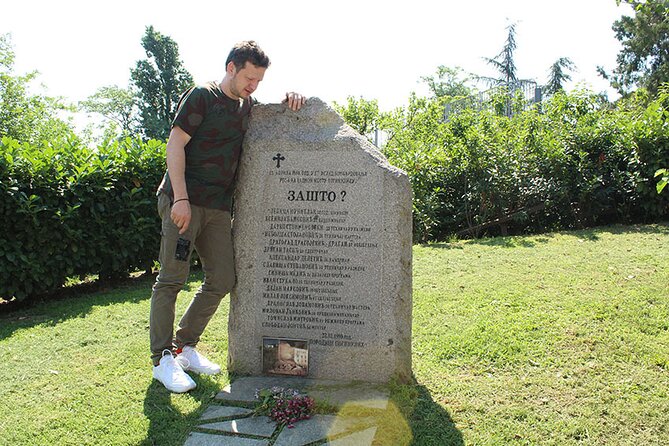
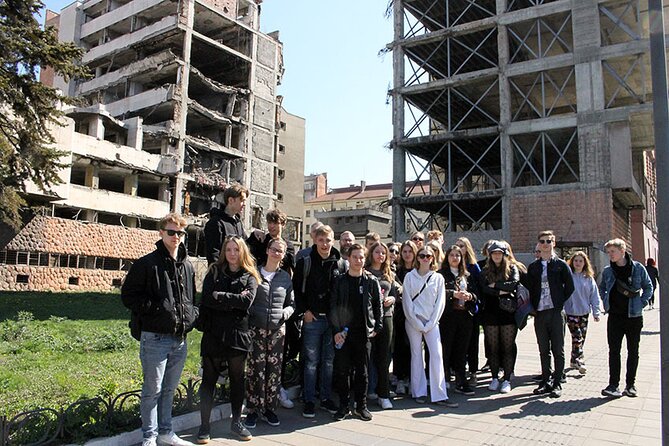
The most striking part of this Belgrade tour is how much of the 1999 bombing campaign remains visible in the city. At RTS, the damaged building and the small Zašto? monument recall the 16 people killed during a night shift. At the Ministry of Defence, the broken structure has become one of the city’s most recognizable reminders of the war.
I like the private format, which gives your group room to ask difficult questions and spend more time at the places that matter most to you. I also like the visual storytelling: the guide uses pictures alongside the surviving buildings, making the events easier to follow than a simple drive-by tour.
The main consideration is the subject itself. This is a serious, politically sensitive tour, not a light sightseeing outing. The five stops also receive roughly 30 minutes each, so you get a strong overview rather than a long visit at any one site.
Key points to know before booking
- Five important bombing sites: See RTS, the Ministry of Defence, Ušće, the former Chinese embassy, and the Air Force Command Building.
- Private hotel and port pickup: The guide-driver can collect you from a hotel, specified apartment or Airbnb, or Belgrade’s cruise port.
- Three to four hours on the road: Each main stop is planned for about 30 minutes, with driving time between locations.
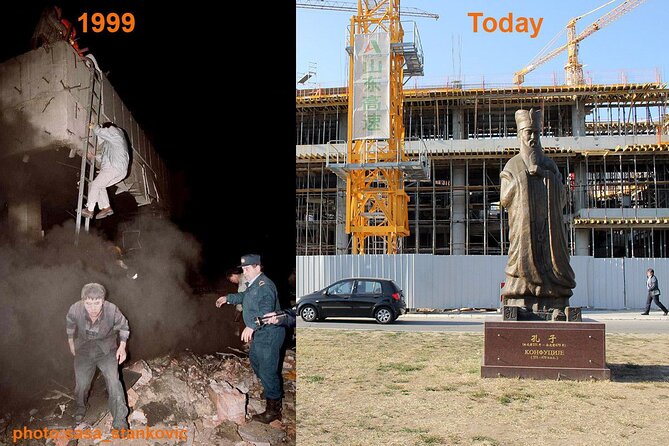
- A personal and visual presentation: Expect photographs and on-site explanations, including the human cost of each attack.
- Best for history-focused visitors: The tour deals directly with war, civilian deaths, military targets, and competing explanations.
- Price depends on group size: At $145.10 per person, it is easier to justify for a small private group than for one person alone.
Why these Belgrade ruins still matter
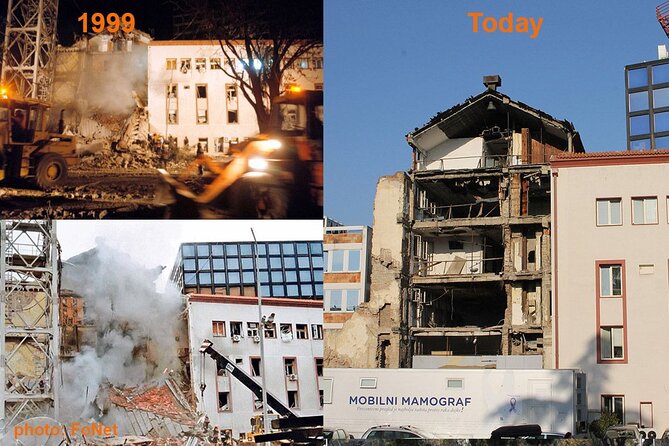
Belgrade is a city where the 1999 NATO campaign has not been pushed entirely out of sight. Some damaged buildings were repaired, some were rebuilt, and others remain in their broken state. This tour focuses on the last category and on places where the damage carries a clear human or political meaning.
You are not simply looking at old walls. You are being asked to connect each site with a particular night, decision, or death. That gives the tour its value, but it also calls for care. The guide’s job is not only to point out missile scars. It is to explain what stood there before, why it was targeted, and what happened afterward.
The private setting helps here. You are not sharing the vehicle with a large group, so you can ask about the military purpose of a site, the civilian damage nearby, or the competing accounts surrounding a controversial strike. I would treat the tour as an introduction to the subject and listen closely to the guide’s interpretation, while remembering that wartime events can be described differently by different sides.
The price is $145.10 per person. That is not a bargain for a solo visitor, but the calculation changes when two or more people share the private vehicle and guide. Hotel pickup, drop-off, bottled water, and transport between five locations are included. Group discounts are also offered, so this makes more sense for a couple, family, or small group than for someone traveling alone on a tight budget.
More Yugoslav-era walks and drives:
- Red Belgrade Communist Tour
★ 5.0 · 78 reviews - Architecture of New Belgrade – Brutalism Decoded
★ 4.5 · 24 reviews - Communist Tour in Belgrade
★ 4.5 · 19 reviews
RTS and the Zašto? memorial
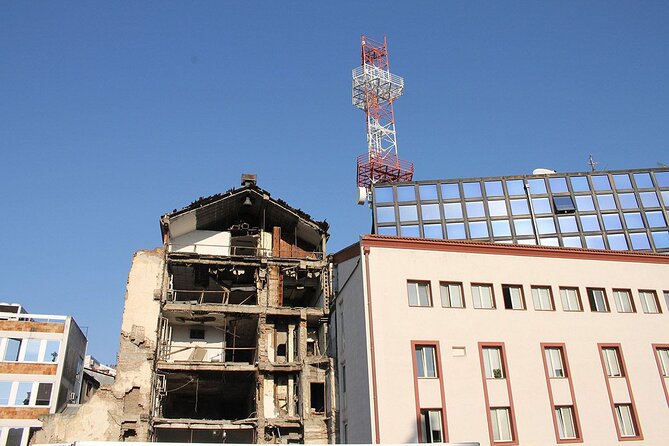
The first stop is RTS, the Radio Television of Serbia building. You will see the original damaged structure still standing, unrepaired, beside the Zašto? monument. The word means Why?, a simple question that gives the site its emotional force.
The attack killed 16 people, most of them young workers on the night shift. That detail turns the stop from an abstract military event into a story about ordinary people at work. The guide explains what happened that night and uses photographs to help you picture the building before and after the strike.
I appreciate the fact that this stop begins with the human cost. It sets the tone for the rest of the morning. You are not starting with military hardware or grand strategy. You are starting with people who were inside a workplace.
The building itself is the main object of interest, and admission is free. Do not expect a conventional museum visit or a polished memorial complex. The power comes from seeing the damaged structure in its present setting. Thirty minutes should be enough for the explanation, photos, and questions, but the site may feel brief if you want time for quiet reflection.
The Ministry of Defence and the April 29 strike
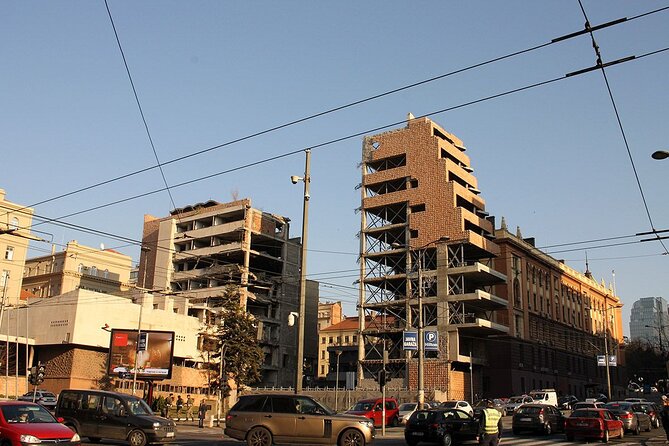
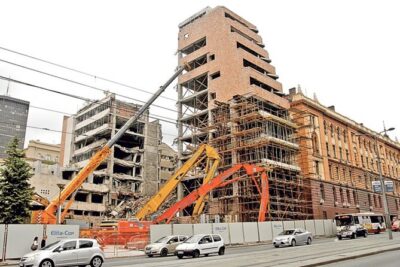
The Ministry of Defence is probably the most familiar image connected with the NATO bombing of Belgrade. Its ruined sections have appeared in countless photographs, and the building remains an immediate visual marker of the 1999 campaign.
Here, the guide discusses the night of April 29, when several military objectives were hit. One person died, and civilian buildings close to the ministry were damaged. That combination of a military target and surrounding civilian destruction is important to understanding why the site remains so charged.
The stop is useful because it makes the scale of the damage easy to grasp. You can compare the grand prewar design with the exposed, damaged structure that remains. The building is not just a relic. It is part of daily Belgrade, and its continued presence keeps the bombing within the city’s present-day view.
You have about 30 minutes here. The guide-driver format means you will not need to work out public transport between sites, and you can focus on the explanation. Still, this is an exterior stop, so the experience depends on the guide’s storytelling rather than on entering a museum or seeing an indoor exhibit.
Ušće and the former Communist Party headquarters
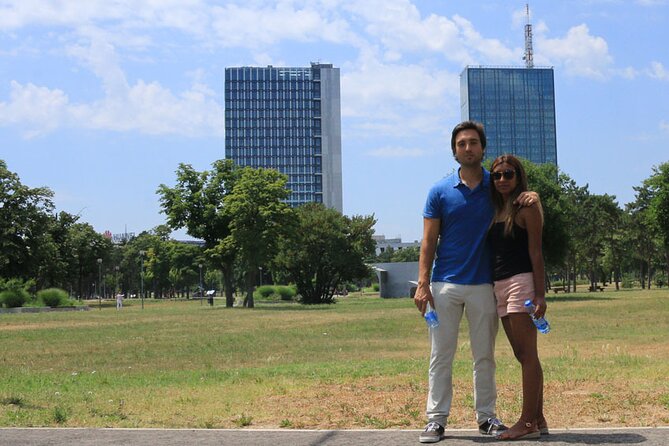
The third stop takes you to Poslovni centar Ušće, now a business center. Its structure follows the same skeleton and appearance as the former Central Committee of the Communist Party of Yugoslavia, which gives the building two layers of meaning.
The guide explains why the building was considered resistant to NATO missiles in 1999 and why it was targeted in the first place. That makes this stop different from RTS and the Ministry of Defence. At RTS, the focus is on the people killed. At the Ministry, it is on the recognizable remains of a military institution. At Ušće, the focus turns to symbolism, political power, and the practical question of what a building could survive.
This is one of the more unusual stops because the structure has been adapted into a modern business center rather than left as a ruin. You may need the guide’s photographs and explanation to understand what changed and what remained. Without that context, it can simply look like a tall office building.
I like this contrast. It shows that the city did not respond to every damaged building in the same way. Some became memorials. Some were repaired or repurposed. The half-hour visit should give you the key facts without slowing down the whole tour.
A few more Belgrade half-days to weigh up
- Northern Serbia: Sremski Karlovci and Novi Sad Full-Day Tour from Belgrade
★ 5.0 · 425 reviews - Day Trip from Belgrade: Gems of Eastern Serbia
★ 5.0 · 424 reviews - Belgrade Nightlife Bar Pub Club Crawl with Drinks
★ 5.0 · 277 reviews - Taxi to/from Belgrade Airport to/from Belgrade City Center
★ 5.0 · 241 reviews
The former Chinese embassy and a disputed target
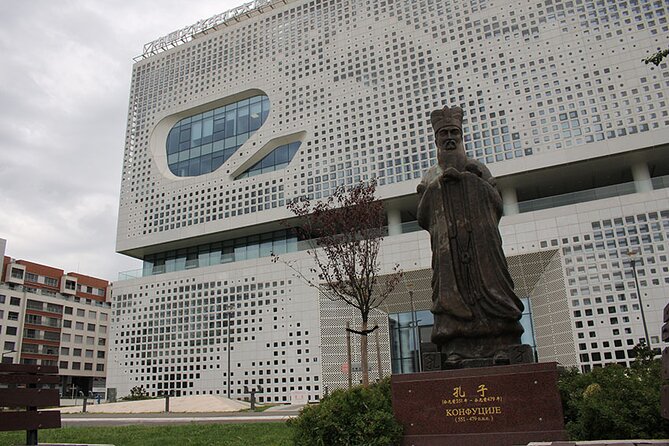
The former Chinese embassy is the most controversial stop on the route. Four Chinese citizens died there on the night of May 7, 1999. The strike has been described as the result of an intelligence mistake, while another explanation suggests the building may have served a different purpose.
The important point for you is that this is not a simple story with one universally accepted explanation. The guide presents the competing claims and the human cost. Listen for the distinction between what is documented, what was officially explained, and what remains suspected. That distinction matters at a site shaped by political tension.
The location is now associated with the Chinese Cultural Center, but the history of the former embassy remains central to the stop. It is a useful place to ask how military intelligence, diplomatic buildings, and civilian danger intersected during the air campaign.
Expect around 30 minutes here. The visit will likely appeal most to people interested in international politics and modern military history. If you prefer sightseeing with little discussion of disputed events, this may be one of the harder stops. The tour does not soften the subject, which is part of its value and also part of its emotional weight.
Air Force Command and the final story
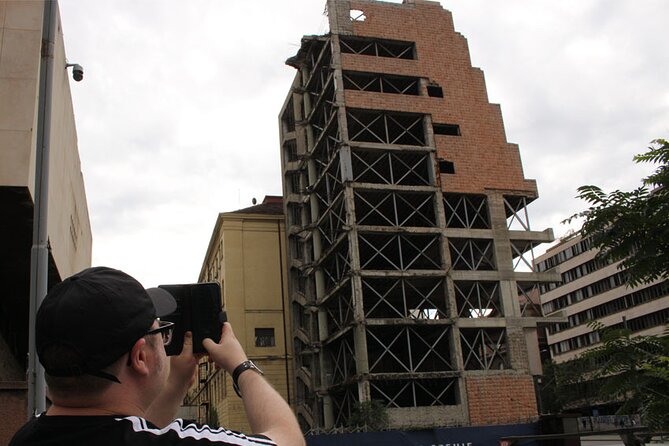
The last stop is the Air Force Command Building, a 1935 structure known for its Yugoslav and Serbian architectural design. Two missiles struck it on April 5, 1999, because it was considered a strategic military objective.
The guide also discusses the pilots who knowingly entered the fight and lost their lives defending the skies over Serbia and Yugoslavia against a much stronger NATO air force. This gives the final stop a military focus after several locations centered on civilians, politics, or symbolic targets.
Architecturally, this may be the most attractive building on the route. Its earlier design helps you see that the bombing damaged more than offices and command facilities. It also affected buildings that had cultural and architectural importance.
The stop lasts about 30 minutes, and it works well as the closing chapter because it returns to military strategy. By this point, you have seen different kinds of targets and heard about different kinds of loss. The guide can tie those threads together before taking you back to your hotel or starting point.
How the private vehicle changes the experience
The tour lasts approximately three to four hours. Five stops at about 30 minutes each account for two and a half hours, with the remaining time used for pickup, driving, and the explanations that connect one location to the next.
That timing is practical. Belgrade’s bombing sites are spread across the city, and visiting them independently would take planning. You would need to identify each location, work out the route, and bring enough background information to understand what you are seeing. Here, the guide-driver handles the transport and provides the context in one morning.
Pickup is available from your hotel. You can also request collection from an Airbnb or apartment if you provide the address. Cruise passengers can be picked up at the Belgrade port, which makes the tour a possible fit during a port visit, provided your ship schedule allows a three to four hour excursion with enough buffer.
The tour begins at 10:00 a.m. Bottled water is included. Food, drinks beyond the water, and personal expenses are not included, so eat beforehand or plan for your own refreshments.
This is a private activity, meaning only your group participates. That matters more here than it would on a standard city highlights tour. You may want to ask direct questions about NATO, Serbia, civilian protection, or the competing accounts of a strike. A private guide gives you a better setting for that than a large group with a fixed script.
Who will get the most from this tour
I would choose this experience if you have a strong interest in modern European history, military affairs, political memory, or the breakup of Yugoslavia. It also suits visitors who have already seen Belgrade’s major landmarks and want to understand a difficult part of the city’s recent past.
The tour is less suitable if you want a cheerful morning of monuments, cafés, and grand views. The subject includes deaths, damaged civilian buildings, and unresolved questions. You should arrive ready to listen, not just take photographs.
Most people can participate, and the private format offers some flexibility in how your group uses the time. The experience is offered in English. No guide name is provided in the available tour details, so you cannot request a particular guide in advance based on the information here.
The tour has a 4.3 rating from 11 published ratings, which suggests a generally positive but not flawless experience. The strongest praise focuses on the educational value, the use of photographs, the on-site storytelling, and the chance to see the locations with a guide who also drives. Those are exactly the areas where this tour earns its price.
Is $145.10 per person a fair price?
For one person, $145.10 is expensive for a three to four hour activity, especially since every stop is free to enter. You are paying for the private vehicle, guide, hotel or port pickup, planning, and the ability to ask questions during a focused route.
For a couple or small group, the value is easier to see. You are not buying five admission tickets. You are buying transport and interpretation that bring scattered sites into one coherent morning. Group discounts may improve the cost further.
The tour is also more valuable if you have limited time in Belgrade. Instead of spending part of a day locating these places on your own, you can see all five in one arranged outing. If you already know the subject well and only want to photograph the buildings, the price may feel high. If you want the stories and the context, the private guide is the main reason to book.
Free cancellation is available until 24 hours before the start time. Changes or cancellations made less than 24 hours before the tour do not qualify for a refund. Confirmation is normally provided when you book, though bookings made within 20 hours of departure are confirmed as soon as possible and depend on availability.
Should you book the NATO Bombing of Belgrade private tour?
Book it if you want a focused, serious look at five places connected with the 1999 NATO bombing and you value a private guide who can explain the sites while driving you between them. The RTS memorial, the ruined Ministry of Defence, the rebuilt Ušće structure, the former Chinese embassy, and Air Force Command each show a different side of the campaign.
I would especially recommend it for a small group that can share the cost and for anyone who wants more than a quick photograph of the famous ruins. Skip it if you are looking for a relaxed sightseeing tour or if war memorials and disputed political history are not your interest. This is a compact, emotionally heavy lesson in Belgrade’s recent past, and it works best when you give it your full attention.
FAQ
How long does the NATO Bombing of Belgrade private tour last?
The tour lasts approximately three to four hours, including transport between the five stops.
What time does the tour start?
The listed start time is 10:00 a.m.
Where can I be picked up?
Pickup is offered from your hotel. You can request pickup from an Airbnb or apartment by providing the location. Pickup is also available from the Belgrade port where cruise ships dock.
Is this a private tour?
Yes. Only your group participates in the activity, with a private guide and driver.
What is included in the price?
The price includes the private guide-driver, hotel pickup and drop-off, bottled water, and private transportation. Food, additional drinks, and personal expenses are not included.
Can I cancel for a full refund?
Yes, if you cancel at least 24 hours before the experience start time. Cancellations or changes made less than 24 hours before the start time are not refunded or accepted.
Just added around Belgrade
- Private Half Day Serbia Tour Novi Sad and Petrovaradin Fortress★ 5.0 · 3 reviews
- 3-Hour Belgrade Zemun Neighborhood Tour★ 5.0 · 8 reviews
- Private Belgrade Street Art and Adventures Walking Tour★ 5.0 · 4 reviews
- Urban & Alternative Belgrade tour★ 5.0 · 4 reviews
- Belgrade Bike Tour: Be a local in the hood of Belgrade!★ 5.0 · 5 reviews
- From Belgrade:Uvac Nature Reserve Tour★ 5.0 · 4 reviews
- Private Wine Tasting by Party in Belgrade★ 5.0 · 3 reviews
- Shooting Experience by Party in Belgrade★ 5.0 · 8 reviews
Communist & Yugoslav History Tours, compared.
Architecture of New Belgrade – Brutalism Decoded
Read our review →

Browse the lists this tour appears in