
Reviewed · COMMUNIST & YUGOSLAV HISTORY TOURS
Architecture of New Belgrade – Brutalism Decoded
New Belgrade makes more sense when you see it as a planned city, not just a collection of gray concrete buildings. This private tour follows that story through the Museum of Contemporary Art, Friendship Park, Genex Tower, Sava Center, and the Block 23 housing district. I especially like the close look at Genex Tower and the way the guide connects bold architecture with ordinary family life. The tour also gives you a useful view of Yugoslavia’s political past, including its break from Stalin and its role in the Non-Aligned Movement.
I like the private format, too. You can ask questions and keep the conversation focused on the buildings or on daily life in New Belgrade. The main caution is timing: at $86.42 per person for about two and a half hours, this is a specialist tour rather than a low-cost sightseeing ride, and one unhappy account describes a shorter, less engaging experience. Confirm the start time and expect the tour to suit you best if concrete architecture genuinely interests you.
Key points at a glance
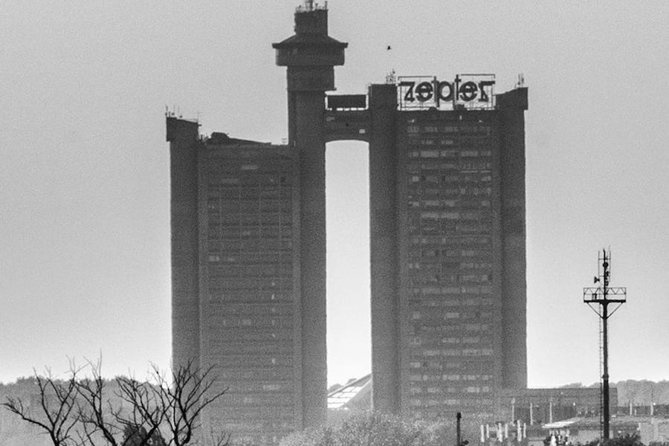
- Genex Tower up close: See Belgrade’s famous Western City Gate, a 30-floor pair of towers built as an early smart building in the Balkans.
- A private English-language tour: Only your group takes part, giving you more room for questions and discussion.
- Architecture with political context: Learn how New Belgrade reflects Yugoslavia’s move away from Stalin and its leadership in the Non-Aligned Movement.
- More than concrete: Hear how schools, kindergartens, sports courts, shops, and apartment blocks worked together in Block 23.
- A strong final stop: Sava Center remains in use and includes interior design solutions that still feel fresh decades after its construction.
- Easy transport plan: Begin at the Museum of Contemporary Art in Ušće and finish at Sava Center.
Why New Belgrade deserves a closer look
Most first visits to Belgrade focus on the old fortress, riverside promenades, cafés, and the historic center. New Belgrade tells a different story. It was planned and built during Yugoslavia’s socialist period, with large public buildings, apartment blocks, broad spaces, and daring experiments in concrete and modern design.
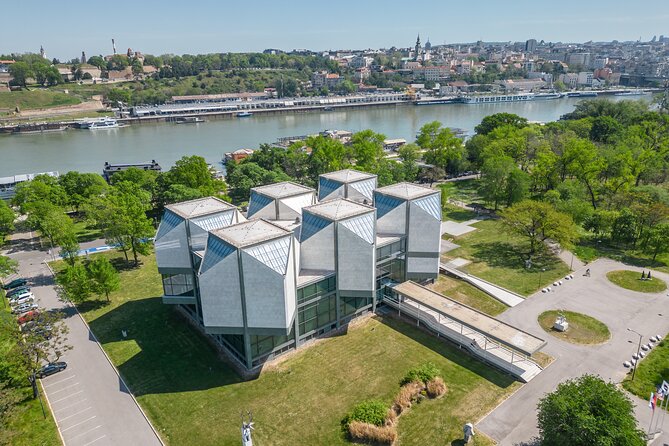
The word brutalism can make people expect bare, gloomy structures. That is only part of the picture here. The buildings on this route also use marble, glass, strong geometric forms, and carefully planned public spaces. The Museum of Contemporary Art is a good early lesson because its precious marble facades do not fit the usual idea of cheap or purely utilitarian socialist construction.
I find the route useful because it does not treat architecture as decoration. The buildings show changes in politics, technology, public life, and housing. You see monuments built for government and international events, then move toward the apartment blocks where people went to school, shopped, played sports, and raised families.
More Yugoslav-era walks and drives:
- Red Belgrade Communist Tour
★ 5.0 · 78 reviews - Communist Tour in Belgrade
★ 4.5 · 19 reviews - NATO Bombing of Belgrade Historical Tour
★ 5.0 · 17 reviews
Starting at the Museum of Contemporary Art
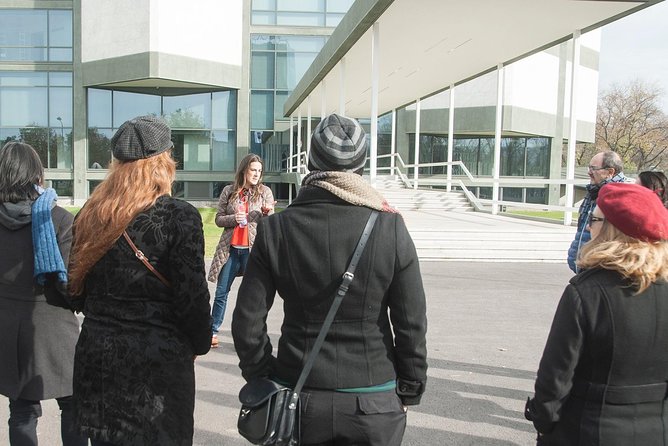
The meeting point is in front of the Museum of Contemporary Art at Ušće, at Ušće 10. This is a practical place to begin because the museum is an easy landmark and the area is near public transportation.
The first stop lasts about 20 minutes. You examine the museum’s modernist volumes from the 1960s and hear why its marble surfaces matter. The material choice pushes back against the common assumption that socialist buildings were always austere, inexpensive, or visually heavy.
The museum visit is an exterior architecture stop, and admission is not included. That detail matters if you are hoping to enter the galleries. The tour’s focus is the building itself, its form, and its place in New Belgrade’s architectural story.
You will not spend a long time here, so this stop works best as an introduction. The guide sets up the key question for the rest of the tour: how can a public building express a political system, a new society, and a belief in modern life all at once?
Friendship Park and the Non-Aligned Movement
From the museum, the tour turns to Friendship Park, or Park Prijateljstva. The stop lasts about 15 minutes and is free.
This is where the political story becomes more visible. In 1961, heads of state planted trees in the park as a symbol of peace. The event is tied to the Non-Aligned Movement, which eventually included 120 countries. Belgrade’s role in that movement helps explain why New Belgrade contains projects that feel larger than a local city district.
The park gives you a pause from the hard surfaces of the buildings. It also adds a human and diplomatic layer to the tour. You are not simply looking at concrete forms. You are seeing a city that wanted to present itself as independent from the Soviet bloc while also avoiding alignment with the Western powers.
The stop is brief, so do not expect a long political lecture. It works as a compact piece of context before the route returns to major civic buildings.
The Government Building and Yugoslavia’s political shift
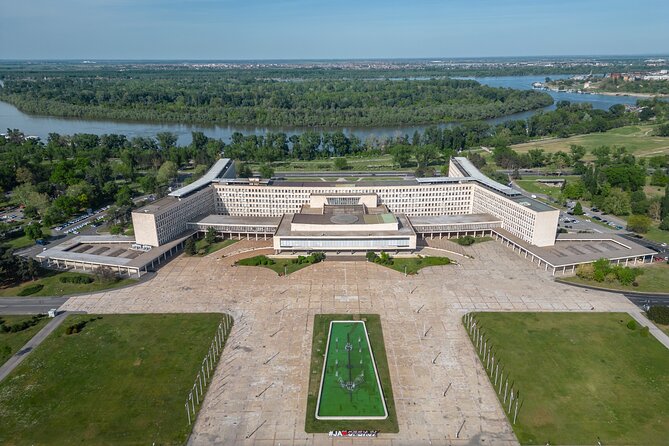
The route next passes the huge Government Building. This is a drive-by rather than one of the longer walking stops, but it carries an important political message.
The building was already under construction when Yugoslavia moved away from Stalin. That timing gives the structure a useful place in the tour. Its design belongs to one phase of Yugoslav politics, while the country’s direction was changing during the work.
You may not get the same close architectural inspection here as at Genex Tower or the museum. Still, the drive-by helps explain why New Belgrade can feel politically layered. Its buildings were not all created under one fixed idea of socialism. The city changed as Yugoslavia defined its own path.
A few more Belgrade half-days to weigh up
- Northern Serbia: Sremski Karlovci and Novi Sad Full-Day Tour from Belgrade
★ 5.0 · 425 reviews - Day Trip from Belgrade: Gems of Eastern Serbia
★ 5.0 · 424 reviews - Belgrade Nightlife Bar Pub Club Crawl with Drinks
★ 5.0 · 277 reviews - Taxi to/from Belgrade Airport to/from Belgrade City Center
★ 5.0 · 241 reviews
Genex Tower, Belgrade’s Western City Gate
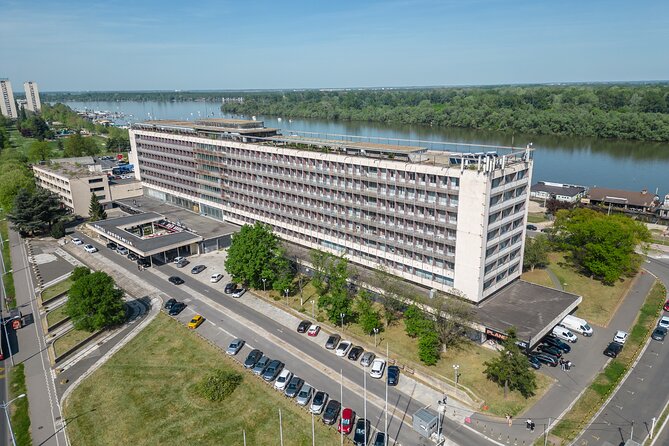
Genex Tower is the visual prize for many people on this route. You stop at Narodnih heroja 45 for about 20 minutes, with free admission.
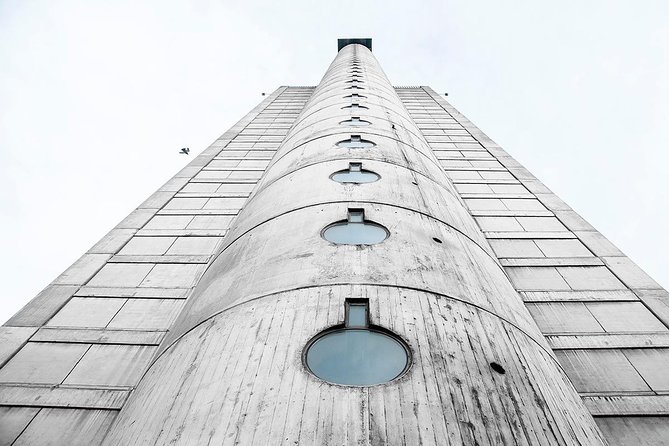
The official name is the Western City Gate of Belgrade. The complex rises 30 floors and is about 40 years old. Its two-part form gives it a dramatic presence, especially when viewed as an entrance marker for New Belgrade.
The guide explains why the tower became an important example of brutalist architecture in international architecture circles. It was also described as the first smart building in the Balkans, which adds a technology story to the concrete and geometry.
This is the place to pay attention to scale. Photographs often flatten the building, but standing near it helps you understand its height and mass. The short stop gives you time for a close look and photographs, though it is not a full architectural study.
Genex Tower is also a good example of the tour’s balance. You get a famous image, but the guide places it in the wider story of Yugoslav ambition. New Belgrade was not built only to house people. It also projected confidence, progress, and a modern future.
Sava Center and the inside of a working landmark
The final major building stop is Sava Center, at Milentija Popovića 9. The tour ends here, and the stop lasts about 15 minutes.
Sava Center was built at the end of the 1970s in record time. It was the first building of its type in this part of Europe, a huge congress center designed for international events and public gatherings.
The most useful detail is that Sava Center is still in function. You are looking at a building that has continued to serve its original purpose rather than becoming an empty relic. The tour also points out interior solutions that still feel fresh after more than 40 years.
That interior focus sets Sava Center apart from a simple exterior photo stop. The building’s design is not only about the outer shell. You consider how people move through a large public complex and how the interior supports meetings, events, and crowds.
Because the tour ends here, you can treat Sava Center as both the last architectural lesson and a convenient endpoint. The finish at Milentija Popovića 9 is separate from the starting point, so plan your day with that in mind.
Block 23 and the practical side of brutalism
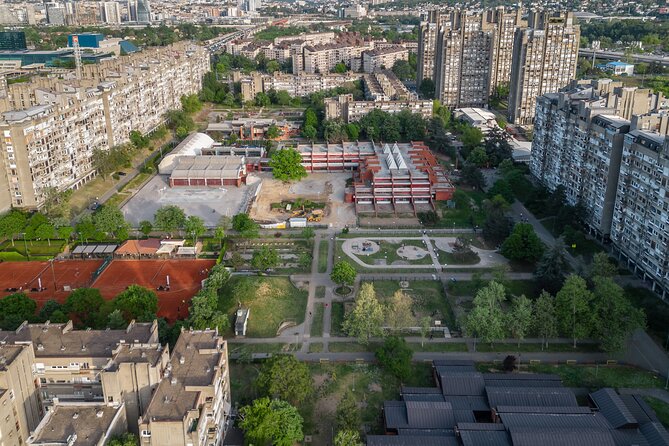
The stop at Primary School Laza Kostić gives the tour its most personal section. It takes place inside Block 23, described as the most representative public housing project on the route, and lasts about 15 minutes.
Here, concrete expressionism becomes part of everyday life. The planning idea was not simply to build apartment towers and leave residents to manage the rest. The block included housing, a school, a kindergarten, sports courts, and a small shopping mall.
That arrangement helps you judge the architecture in practical terms. You can ask whether the buildings supported daily life, not just whether they look striking in photographs. A school next to housing, sports courts nearby, and basic shopping within the block all point to a planned neighborhood rather than a collection of isolated towers.
The guide also shares personal stories about life in the blocks during their best decades, especially the 1960s, 1970s, and 1980s. You then hear about the much harder experience of the 1990s. This contrast is one of the strongest parts of the tour because it keeps the architecture connected to real lives.
Xenia is named in one account as the guide for this route, and her approach is described as combining architectural explanation with the human side of city life. That style is exactly what Block 23 needs. Without personal context, the housing district could feel like a final set of concrete shapes. With it, you get a clearer sense of how residents experienced the neighborhood over time.
What the private format adds
This is a private activity, so only your group takes part. That makes a difference on a specialist route where you may want to ask why one building uses marble, how a planned block functioned, or what changed in the 1990s.
The tour is offered in English and uses a mobile ticket. Confirmation arrives at booking, and the meeting point is easy to identify at the museum. Most people can participate, and the route is near public transportation.
The private format does not guarantee a particular guide unless the booking confirms one. However, Xenia is specifically named in the supplied experience details, so you can ask whether she will lead your departure if that matters to you.
The route takes about two and a half hours. The listed stops add up to short visits, with some time needed to move between them. Expect a brisk introduction to several sites, not a slow architectural survey of each building.
Is $86.42 per person fair?
At $86.42 per person, the price is high for a two-and-a-half-hour city tour. The value depends on what you want from Belgrade.
If you only want to photograph Genex Tower, see Sava Center from outside, and pass through New Belgrade, you can spend less by exploring independently. The tour earns its price through the private guide, the political background, and the personal stories about life in the blocks.
The cost also covers a focused route that would be harder to assemble on your own. The stops are spread across New Belgrade, and their meaning becomes clearer when viewed as parts of one planned city. You are paying for interpretation, not simply transport between landmarks.
I would consider it good value for architecture students, design fans, photographers who want context, and anyone who has already seen central Belgrade and wants a different side of the city. It is less convincing for a first-time visitor seeking the main historic sights or for someone who wants a long, leisurely walk.
What the ratings tell you about the experience
The experience has a 4.6 rating from 24 reviews, with 92 percent recommending it. The strongest praise centers on punctuality, clear explanations, and the guide’s ability to connect buildings with ordinary life in Belgrade.
That last point matters. A tour about brutalism can easily become a list of dates, architects, and concrete forms. The most praised quality here is the human detail: how people used the blocks, how the city felt during its successful decades, and how life changed in the 1990s.
There is also a clear warning in the low rating. One account describes an experience of less than two hours, with little empathy or preparation. This is a small sample, but it is worth taking seriously because the tour’s value depends heavily on the guide. A strong guide turns the route into a coherent story. A weak one leaves you with a few monuments that you could have seen alone.
Who should book this New Belgrade tour?
Book it if you like modern architecture, political history, urban planning, or the social story behind public housing. It is also a smart choice if you want to get beyond Belgrade’s usual old-town sights and understand why New Belgrade looks and feels so different.
You will get the most from it if you arrive curious about contradictions. These buildings can be imposing but practical, ideological but international, and severe in material while surprisingly thoughtful in function.
Skip it if your main goal is museum interiors, traditional Serbian architecture, or a relaxed food-and-neighborhood walk. The Museum of Contemporary Art stop does not include admission, and the route focuses on architecture from the outside as well as selected interior spaces at Sava Center.
At the time of booking, you can cancel free of charge up to 24 hours before the start time. Changes or cancellations made less than 24 hours in advance are not accepted for a refund.
Should you book it?
I would book this tour if you want the story behind New Belgrade rather than a quick look at its most photogenic towers. The combination of Genex Tower, Sava Center, Friendship Park, the museum, and Block 23 gives you a useful cross-section of Yugoslav modernism.
The best reason to go is the link between grand ideas and normal life. You see international politics, new technology, planned housing, schools, shopping, and the memories of people who lived through several very different decades.
The main risk is guide quality, along with the fairly high price for a short tour. If you are comfortable paying for a private, specialist explanation and you confirm the details before arrival, this is one of the better ways to make sense of Belgrade’s concrete side.
FAQ
How long does the Architecture of New Belgrade tour last?
The tour lasts approximately 2 hours and 30 minutes.
What language is the tour offered in?
The tour is offered in English.
Is this a private tour?
Yes. Only your group participates in the activity.
Where does the tour begin?
The tour begins in front of the Museum of Contemporary Art at Ušće 10 in Belgrade.
Where does the tour end?
The tour ends at Sava Center, at Milentija Popovića 9, Belgrade 11000.
Is admission to the Museum of Contemporary Art included?
No. Admission to the Museum of Contemporary Art is not included. The stop focuses on the building’s modernist architecture.
Can I cancel for a full refund?
Yes. You can cancel at least 24 hours before the experience start time for a full refund. Cancellations or changes made less than 24 hours before the start time are not accepted for a refund.
Just added around Belgrade
- Private Half Day Serbia Tour Novi Sad and Petrovaradin Fortress★ 5.0 · 3 reviews
- 3-Hour Belgrade Zemun Neighborhood Tour★ 5.0 · 8 reviews
- Private Belgrade Street Art and Adventures Walking Tour★ 5.0 · 4 reviews
- Urban & Alternative Belgrade tour★ 5.0 · 4 reviews
- Belgrade Bike Tour: Be a local in the hood of Belgrade!★ 5.0 · 5 reviews
- From Belgrade:Uvac Nature Reserve Tour★ 5.0 · 4 reviews
- Private Wine Tasting by Party in Belgrade★ 5.0 · 3 reviews
- Shooting Experience by Party in Belgrade★ 5.0 · 8 reviews
Communist & Yugoslav History Tours, compared.

Browse the lists this tour appears in