
Reviewed · COMMUNIST & YUGOSLAV HISTORY TOURS
Tito and History Vintage Car Tour
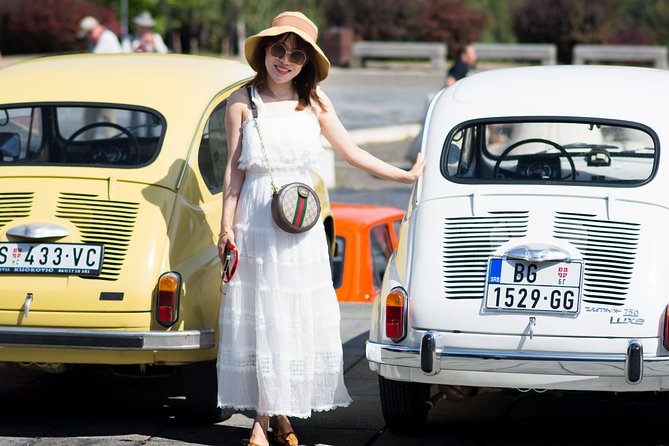
The Yugo is the star here, but Belgrade provides the setting. This private tour uses vintage Yugoslav cars to connect the much-mocked little automobile with Tito-era architecture, the Non-Aligned movement, and the city’s grand socialist buildings. You’ll visit the Museum of Yugoslavia, see the Genex Tower, and hear stories you would likely miss on a standard city tour.
I like the small private format, since your guide can spend time on your questions instead of following a fixed group script. I also like the practical touches: snacks and soda are included, pickup can be requested, and the tour price covers the listed fees.
The main consideration is the $144 cost for roughly two to three hours. That can be fair for a private experience with transport and a specialist theme, but it is not the cheapest way to see Belgrade. The tour also depends on good weather, so keep that in mind when planning.
Key points about the Tito and History Vintage Car Tour
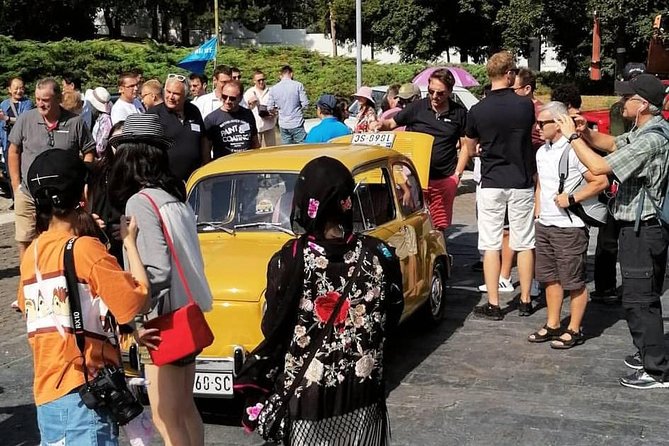
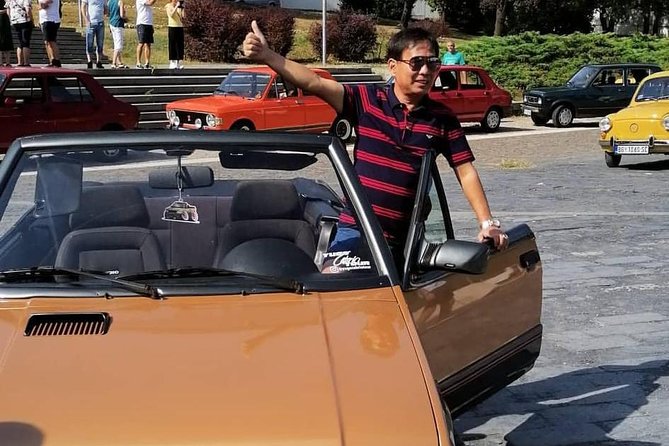
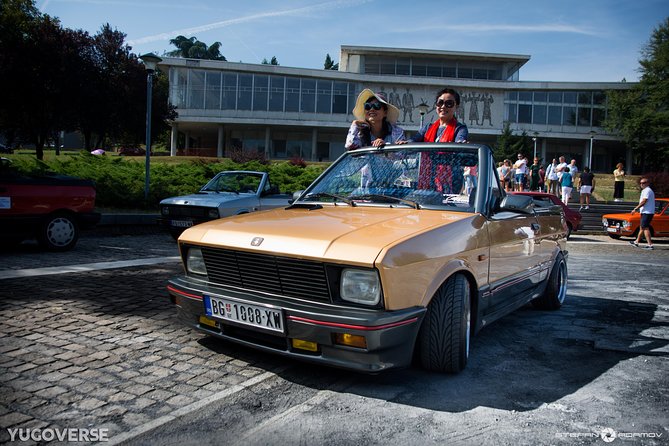
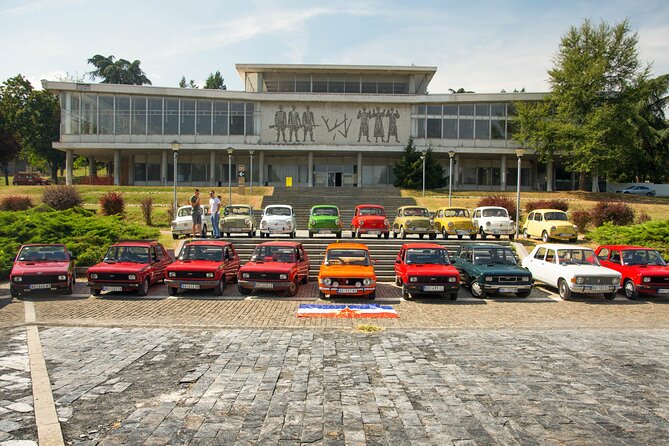
- Ride in vintage Yugoslav cars: The tour uses old Yugoslav vehicles to explain the Yugo, including the unusual Yugo convertible.
- See Belgrade’s socialist-era icons: Stops include Palata Srbije, the Genex Tower, and the Museum of Yugoslavia.
- Visit the Museum of Yugoslavia: About 40 minutes are set aside for Tito-related collections and the House of Flowers area.
- Learn about the Non-Aligned movement: Park of Friendship preserves a row of trees planted by leaders at the 1961 Belgrade conference.
- Travel privately: Only your own group takes part, with pickup available on request.
- Get simple extras included: Snacks, soda, and listed admission fees are covered, so you are not reaching for your wallet during the outing.
Why a vintage Yugo is a fine way to see Belgrade
Many city tours begin with medieval Belgrade or the fortress. This one takes a different route. Its subject is modern Yugoslavia, a country that no longer exists but still shapes the city’s architecture, public spaces, museums, and memories.
The car gives the tour a useful thread. The Yugo was Yugoslavia’s best-known automobile export, and its reputation has taken plenty of punishment. Some people call it the worst car in the world. That joke is part of the appeal, but the tour goes beyond the punchline by placing the car in the setting that produced it.
You’ll learn about the Yugo, its place in Yugoslav life, and even the Yugo convertible. That last detail makes the experience more than a basic old-car outing. You are not simply looking at a vehicle in a garage. You are using it as a way to understand a vanished country and its attempt to build its own identity.
The private setup matters here. A subject like Yugoslav history can raise questions about politics, Tito, national identity, and daily life. With only your own group present, you can ask for more explanation or keep moving when a stop has given you enough.
The tour is usually planned for two to three hours. That is long enough to cover several major sites without turning the day into a full historical lecture. It is also short enough to fit before or after other Belgrade plans.
More Yugoslav-era walks and drives:
- Red Belgrade Communist Tour
★ 5.0 · 78 reviews - Architecture of New Belgrade – Brutalism Decoded
★ 4.5 · 24 reviews - Communist Tour in Belgrade
★ 4.5 · 19 reviews
Starting at the National Assembly and the old royal connection
The first listed stop is the House of the National Assembly of the Republic of Serbia. The building has a connection to the Obrenović dynasty, since it was once a royal residence. Today, it houses the City Assembly of Belgrade.
You have about 15 minutes here, and admission is free. That short stop suggests a look at the exterior and an explanation of its background rather than a lengthy interior visit. It works well as an opening because it places the later Yugoslav story in a broader Serbian setting.
I like this kind of beginning. Before the tour reaches Tito and socialist modernism, you get a reminder that Belgrade’s political story did not begin in the twentieth century. The building links royal Serbia with the later federal state, giving you a useful point of comparison.
Do not expect this stop to carry the whole tour. Fifteen minutes is enough to see the place and hear the key facts, but not enough for a detailed architectural visit. If you want a long look inside the assembly building, this experience is not designed for that.
Park of Friendship and the 1961 summit
Park of Friendship, also called Park Prijateljstva, is one of the more unusual stops. It was created in connection with the Belgrade Conference in September 1961, the first summit of the Non-Aligned movement.
The park was meant to express peace and cooperation among countries that did not want to align with either major Cold War power. Its most memorable feature is the Peace Alley, a 180-meter path lined by two rows of trees.
The trees were planted by presidents and other prominent figures who attended the summit. Names connected with the path include Queen Elizabeth II, Margaret Thatcher, Robert Mugabe, Jimmy Carter, Indira Gandhi, and Nikolay Ceausescu. Members of the Rolling Stones also planted trees there.
You have about 20 minutes at the park. That is enough to walk a section of the path, see the trees, and hear why this place matters. The park’s unfinished quality is part of its character. It feels less like a polished formal garden and more like a public idea that time left incomplete.
That makes it an interesting stop, but it may not impress you if you expect a manicured attraction with many displays. The value is in the story. Your guide helps turn a quiet path into a reminder of Cold War diplomacy, grand hopes, and the gap between political ceremony and what followed.
Palata Srbije, the grand modernist statement
Palata Srbije is one of Belgrade’s biggest modernist buildings and one of the tour’s strongest architectural stops. It was built as a major state structure during the Yugoslav period, and its scale reflects the importance the country wanted to project.
The tour allows about 20 minutes here. You will hear about the building’s history and see pictures of the interior, which is closed to the public. That interior access limitation is worth knowing in advance. You are visiting for the exterior, the story, and the images, not for a full walk through the rooms.
The building’s importance goes beyond size. Palata Srbije represents the confident public face of Yugoslavia, a state that wanted its own political path and a seat at international tables. Its architecture was meant to communicate authority and modernity.
I would pay close attention to your guide’s explanation here. A large government building can seem distant if you only take a quick photograph. The context makes it more readable, especially after the stop at Park of Friendship and its link to the Non-Aligned movement.
More history walks near Belgrade:
- History and Culture in my Belgrade
★ 5.0 · 41 reviews - NATO Bombing of Belgrade Historical Tour
★ 5.0 · 17 reviews - Football tour: Red Star and Partizan Ultras History
★ 5.0 · 14 reviews - Romantic history tour of Belgrade
★ 5.0 · 8 reviews
The Genex Tower and Belgrade’s brutalist side
The Western City Gate, better known as the Genex Tower, gives the tour its sharpest visual change. This 36-story complex was designed in 1977 in the brutalist style.
It is formed by two towers connected by a two-story bridge, with a revolving restaurant at the top. The structure is bold, angular, and hard to mistake for anything else in Belgrade. If you enjoy concrete architecture and large-scale modern design, this is likely one of the tour’s most memorable views.
The Genex Tower was conceived as a western gateway to the city. Even from outside, its paired towers and elevated connection make it feel more like a piece of futuristic infrastructure than an ordinary office block.
The tour’s car theme fits this stop nicely. Both the Yugo and the Genex Tower belong to the same broad period of Yugoslav ambition, industry, and design. One is a small mass-market car with a famously uneven reputation. The other is a huge architectural statement. Seeing them in the same experience gives you a better sense of the era’s range.
The provided schedule does not give a precise time for this stop, so expect the length to depend on the route and the guide’s explanation. It is primarily an exterior visit. You should not book this tour expecting a full architectural tour of the tower or access to every part of the complex.
Forty minutes at the Museum of Yugoslavia
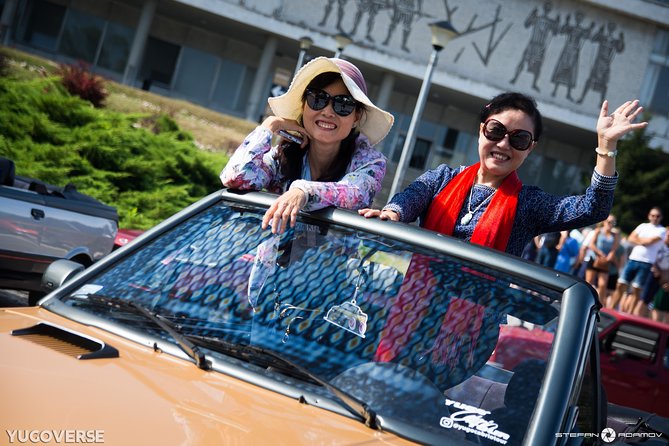
The Museum of Yugoslavia is the main historical stop and receives about 40 minutes, the longest scheduled visit on the tour. Admission is included.
This is not a conventional national history museum. Its core began in 1962 as a collection of gifts presented to Tito by citizens of Yugoslavia and leaders from around the world. After Tito’s death, the museum organization was joined with the House of Flowers, the residence, the Pool House, the Hunting Lodge, and the Old Museum, along with Tito’s tomb.
The museum’s collections contain more than 200,000 objects arranged across 20 collections. You will not see all of that in 40 minutes, of course. The allotted time gives you a focused introduction rather than an exhaustive museum visit.
That limit is both practical and restrictive. It keeps the tour moving, but anyone deeply interested in Tito or Yugoslav history may want to return on a separate visit. The museum has enough material to reward more time than this tour can provide.
Still, the stop gives needed depth to the car ride. Without it, the Yugo could remain a novelty. Here, you can connect the car to the political and social world that produced it, a country that collected international gifts, hosted major diplomatic meetings, and presented itself as an independent force.
The House of Flowers connection is also important. Tito’s memorial site adds a personal and symbolic layer to the museum visit. Your guide can help explain how the museum’s different buildings and collections fit together, which is especially useful if this is your first introduction to Yugoslav history.
What the private format and included extras mean
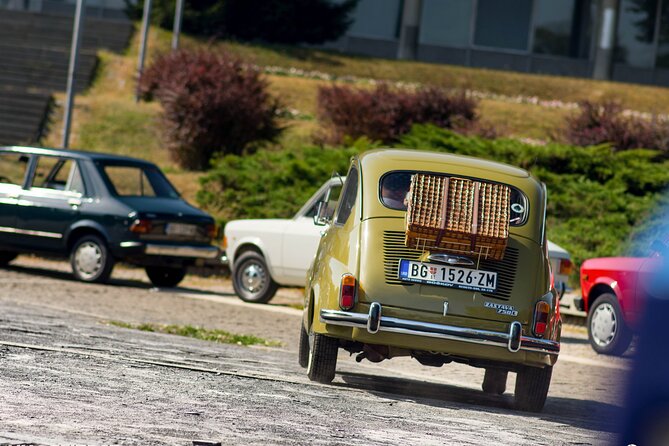
This is a private activity, so only your group participates. That makes the $144 price easier to assess. If you are traveling with several people, the cost may compare favorably with booking several individual places on a specialist experience. For one person or a couple, it is a bigger spend.
Pickup is offered, and the listed meeting point is Dragoslava Jovanovića 14 in central Belgrade. Since the tour ends at a different location, check the final drop-off details before you book and plan your next activity with some flexibility.
Snacks and soda are provided along the way. They are small extras, but they suit a two to three hour drive with several stops. Listed fees are also taken care of, so you should not need to make extra payments at each site.
The tour is available from 9:00 a.m. to 9:00 p.m., Monday through Sunday, during the stated operating period. Confirmation is subject to availability and is sent within 48 hours of booking. Service animals are allowed, and the experience is near public transportation.
Most people can participate, but the tour requires good weather. If poor weather forces a cancellation, you are offered another date or a full refund. You can also cancel for a full refund up to 24 hours before the start time. Inside that window, refunds are not provided, and changes are not accepted.
One guide specifically associated with the experience is Jovana. The useful quality to look for is not just factual recall, but clear enthusiasm for the cars and the subject. The tour works best when the guide can explain why a small automobile, a memorial museum, and a giant concrete tower belong in the same story.
Who will get the most from this Belgrade tour
I would choose this experience if you have already seen Belgrade’s best-known central sights and want a different angle. It is especially suited to anyone interested in:
- Yugoslav history and Tito
- Cold War politics and the Non-Aligned movement
- Brutalist and modernist architecture
- Unusual cars and industrial design
- Small private tours with room for questions
- A short activity that fits into a busy city visit
It is also a good pick for a mixed group. One person can focus on the Yugo, another on architecture, and another on political history. The stops are varied enough to prevent the experience from becoming a single-subject lecture.
I would think twice if your main goal is a broad introduction to Belgrade. The tour does not focus on every major sight, the medieval fortress, or the city’s full cultural history. It follows a clear modern-Yugoslav theme.
I would also be cautious if you dislike car-based sightseeing or prefer long walks. The value comes from moving between landmarks and hearing the connections along the way. The exact amount of time spent outside the car is not fully specified.
Should you book the Tito and History Vintage Car Tour?
Book it if the idea of seeing Belgrade through the Yugo, Tito, brutalist buildings, and Non-Aligned history sounds more appealing than a standard highlights tour. The private format, included snacks, pickup option, and covered fees make the experience easy to manage, while the Museum of Yugoslavia gives the outing real historical weight.
At $144, it is best viewed as a specialist private tour, not a bargain sightseeing ride. It offers good value for a small group that wants a focused guide and a distinctive vehicle, but less value if you only want quick photographs of buildings.
The strongest reason to choose it is the combination of subjects. You get the humor and curiosity of the Yugo, the formal grandeur of Palata Srbije, the stark geometry of the Genex Tower, and the political memory preserved at the Museum of Yugoslavia. That unusual mix gives you a more personal understanding of twentieth-century Belgrade.
FAQ
Where does the Tito and History Vintage Car Tour start?
The listed meeting point is Dragoslava Jovanovića 14, Belgrade 11000, Serbia. Pickup can also be requested.
Where does the tour end?
The activity ends at a different location from the starting point. Check the specific end details when booking.
How long does the tour last?
The experience lasts approximately two to three hours.
Is the Museum of Yugoslavia included?
Yes. The itinerary allows about 40 minutes at the Museum of Yugoslavia, and admission is included.
Are snacks and drinks provided?
Yes. Snacks and soda are provided during the tour.
Is this a private tour?
Yes. Only your own group participates in the activity.
Can I cancel for a full refund?
Yes, if you cancel at least 24 hours before the experience start time. Cancellations made less than 24 hours in advance are not refunded.
Just added around Belgrade
- Private Half Day Serbia Tour Novi Sad and Petrovaradin Fortress★ 5.0 · 3 reviews
- 3-Hour Belgrade Zemun Neighborhood Tour★ 5.0 · 8 reviews
- Private Belgrade Street Art and Adventures Walking Tour★ 5.0 · 4 reviews
- Urban & Alternative Belgrade tour★ 5.0 · 4 reviews
- Belgrade Bike Tour: Be a local in the hood of Belgrade!★ 5.0 · 5 reviews
- From Belgrade:Uvac Nature Reserve Tour★ 5.0 · 4 reviews
- Private Wine Tasting by Party in Belgrade★ 5.0 · 3 reviews
- Shooting Experience by Party in Belgrade★ 5.0 · 8 reviews
Communist & Yugoslav History Tours, compared.
Architecture of New Belgrade – Brutalism Decoded
Read our review →
Browse the lists this tour appears in