
Reviewed · COMMUNIST & YUGOSLAV HISTORY TOURS
Red Belgrade Communist Tour
Belgrade’s communist past is not locked away in one museum. It is spread across Republic Square, Terazije, Pionirski Park, and Dedinje, where grand halls, gray apartment blocks, monuments, and Tito-era institutions tell a complicated story. This four-hour walk and trolley ride connects those places in a useful order, from postwar socialism to Yugoslavia’s breakup.
I like the personal guiding and the chance to visit the Museum of Yugoslavia without having to work out the trolley route yourself. I also like the balance between public squares and private memories, including pioneer rituals, Western music, Tito’s gifts, and the difficult conflicts of the 1990s.
The main consideration is the name. This is not only a communism tour. It covers the wider story of Serbia and Yugoslavia from World War II through the 1990s and into the early 2000s. If you want a tightly focused political study of communist theory, parts may feel broad.
Key points to know before booking
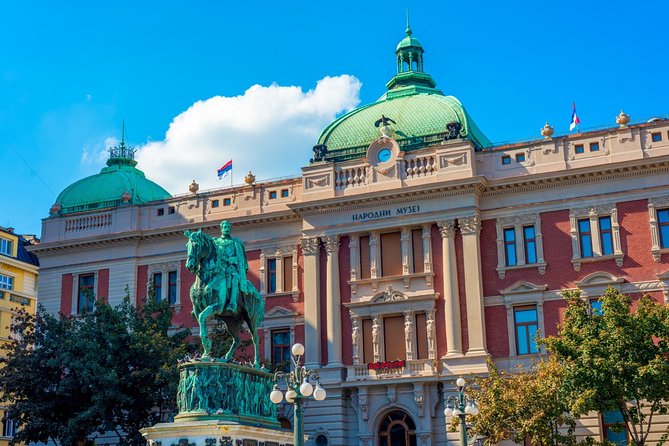
- Republic Square begins the story: Hear how Tito’s postwar speech helped shape the new Yugoslavia.
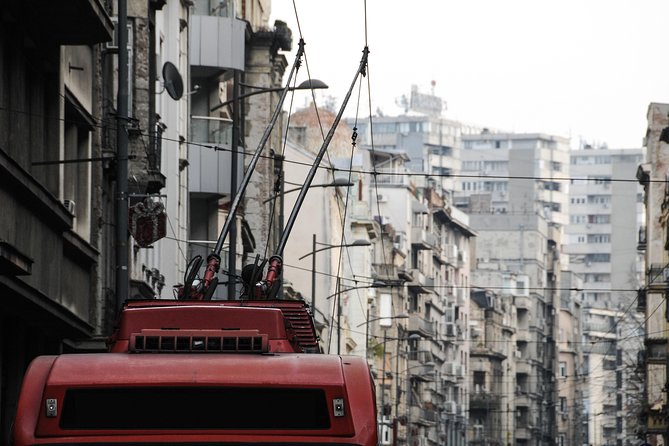
- The trolley ride is part of the history: You travel to Dedinje using a form of public transport associated with everyday Yugoslav life.
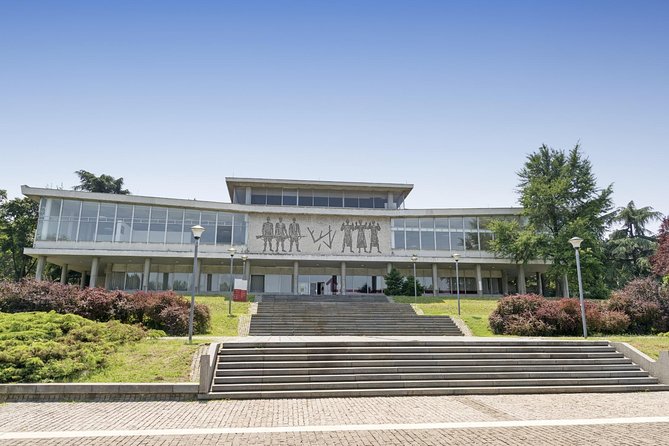
- The Museum of Yugoslavia is the tour’s centerpiece: The visit includes Tito’s ceremonial gifts and the House of Flowers mausoleum.
- Guides make the difference: Nebo, Radica, Dragana, Hristina, Marko, and others have been praised for clear explanations, humor, and personal stories.
- Expect a lot of walking: Comfortable shoes and water are sensible, and the route includes hills.
- The small-group option offers value: The maximum is 25 people, with private tours also available.
What this Belgrade history tour is really about
The Red Belgrade Communist Tour uses the city as a history book. You move through places connected with the creation, daily life, public rituals, and eventual collapse of socialist Yugoslavia.
That wider scope is important. Yugoslavia was not the same as the Soviet Union, and the tour explains why. You hear about Tito’s leadership, the country’s position between East and West, the influence of Western music and fashion, and the way socialism shaped work, education, public ceremonies, and family life.
The story also includes darker material. You can expect discussion of political control, the idealized image of Tito, the breakup of Yugoslavia, and the conflicts of the 1990s. The tone is intended to be balanced rather than a simple celebration or condemnation.
Guides named in the feedback include Nebo, Radica, Dragana, Hristina, Marko, Nina, Isadora, Borjan, and Cristina. The strongest praise goes to guides who answer questions directly and explain how the past still affects Serbia today. Nebo, in particular, is described as friendly, careful, and willing to engage each person in the group.
Because this subject is politically sensitive, a good guide matters. You should expect different viewpoints and personal interpretations, not only dates and official statements.
More Yugoslav-era walks and drives:
- Architecture of New Belgrade – Brutalism Decoded
★ 4.5 · 24 reviews - Communist Tour in Belgrade
★ 4.5 · 19 reviews - NATO Bombing of Belgrade Historical Tour
★ 5.0 · 17 reviews
Republic Square and the birth of socialist Yugoslavia
The meeting point is Trg Republike, or Republic Square, at 10:00 am. This is a central location, close to public transport and easy to reach in central Belgrade.
Here, the guide sets up the basic story. The square is linked with Tito’s speech during the creation of socialist Yugoslavia, making it a fitting place to begin. From the first stop, the route shows how several layers of Belgrade sit on top of each other.
You will see socialist-era buildings beside older monuments and structures from the Yugoslav Kingdom. This mixture gives you a better sense of the city than a museum display alone. Belgrade did not become communist overnight, and the architecture shows the tension between old royal institutions, postwar construction, and later development.
The stop lasts about 20 minutes and has no separate admission fee. The short time means you will be standing while the guide explains the setting, so listen for the broad framework rather than expecting a detailed architectural survey.
Terazije, Hotel Moskva, and the cult of work
The next stop is Terazije, another central square with a different mood. The guide connects the area with public celebrations, glamorous holidays, and Hotel Moskva, one of Belgrade’s best-known historic hotels.
The contrast is useful. Socialist Yugoslavia promoted equality and work, yet public life also included ceremony, status, famous visitors, and carefully staged celebrations. At the former Marx and Engels Square, you hear about the Trade Union Hall and the official importance of labor.
One memorable theme is the idea of a miner becoming a national celebrity. This helps explain how work was turned into a public ideal. Industrial labor was not treated as an ordinary job. It was part of the state’s moral story about building a new society.
This section lasts around 20 minutes. It is mostly about context, so the value comes from the guide’s explanation rather than from a single major sight. If you enjoy social history, this may be one of the more revealing parts of the morning.
Pioneer rituals and Western music at Pionirski Park
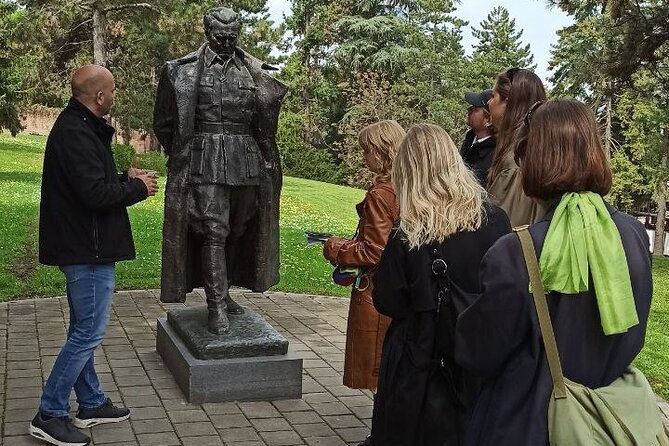
At Pionirski Park, the subject shifts to childhood and daily life. You learn about the pioneer oath, a formal ritual for children raised under the socialist system.
This is where the tour moves beyond leaders and buildings. The guide explains how the regime shaped identity from an early age, while also presenting Yugoslavia as more open than many other socialist states.
Western music and changing lifestyles are part of the story. Yugoslav citizens had greater contact with Western cultural trends than people in many countries behind the Iron Curtain. That access affected music, clothing, entertainment, and ideas about modern life.
The guide also introduces the monument to Ivo Andrić, the Serbian Nobel Prize-winning writer and former ambassador in Berlin at the start of World War II. His presence adds another layer to the tour, linking literature and diplomacy with the political upheavals of the period.
This stop and the transition to the trolley take about 40 minutes. It is an information-heavy section, so the pauses matter. A guide who can explain the material in small pieces will make a real difference, and the strongest accounts of the tour praise exactly that quality.
A few more Belgrade half-days to weigh up
- Northern Serbia: Sremski Karlovci and Novi Sad Full-Day Tour from Belgrade
★ 5.0 · 425 reviews - Day Trip from Belgrade: Gems of Eastern Serbia
★ 5.0 · 424 reviews - Belgrade Nightlife Bar Pub Club Crawl with Drinks
★ 5.0 · 277 reviews - Taxi to/from Belgrade Airport to/from Belgrade City Center
★ 5.0 · 241 reviews
The trolley ride to Dedinje
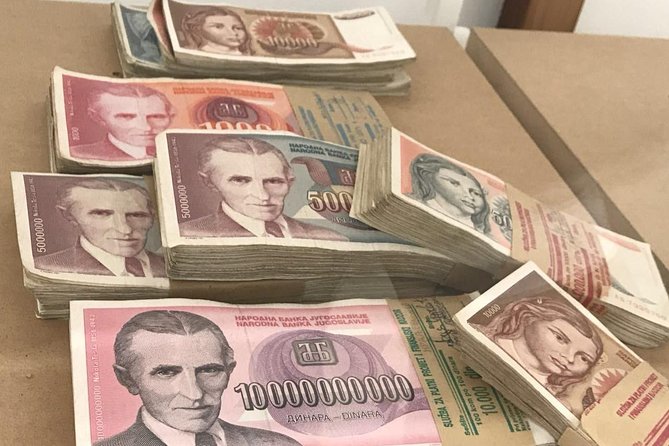
The one-way trolley ride is more than a way to save your feet. It connects central Belgrade with Dedinje, an upscale district known for embassies, villas, and important political residences.
You travel on a form of public transportation that was part of ordinary city life during Yugoslavia’s existence and remains active today. The ride gives the tour a welcome change of pace after the walking sections.
It also helps you see why the Museum of Yugoslavia is better visited with a plan. The museum sits outside the central sightseeing area, and reaching it independently may require more attention to public transport. The included trolley ticket removes that small logistical headache.
The transport portion is not a sightseeing cruise, so keep expectations practical. Its value is the connection between the two halves of the tour, and the chance to move through Belgrade as local residents do.
The Museum of Yugoslavia and Tito’s personal world
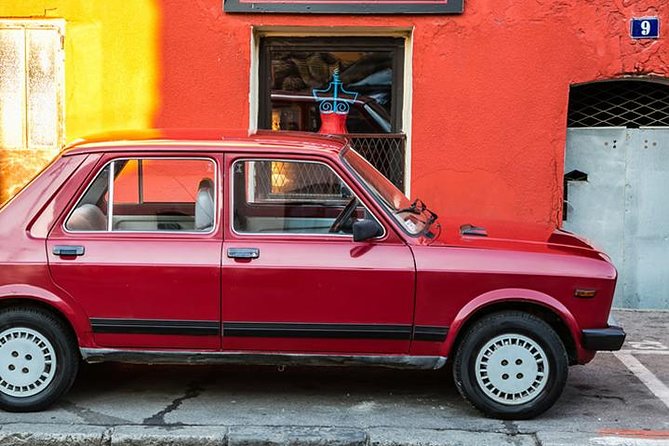
The visit to the Museum of Yugoslavia lasts about 90 minutes and includes admission. This is the longest stop and the main reason to choose this experience over a simple city walk.
The museum focuses on Josip Broz Tito, the communist leader who ruled Yugoslavia for much of its postwar history. The collection includes ceremonial gifts presented to him by political figures, royalty, and other important visitors.
One especially striking object is identified as a gift from the Apollo 11 crew. That detail reflects Yugoslavia’s unusual international position. The country was socialist, but it maintained relationships beyond the Soviet bloc and cultivated its own diplomatic identity.
The museum can also complicate the image of Tito. He is presented as a leader associated with modernity, national unity, and a promised bright future, but the surrounding story includes censorship, political power, and the pressures hidden behind official ceremonies.
The guide’s role here is valuable. A museum visit on your own can leave you with objects but not enough context. With the guide, the gifts, photographs, and exhibits are tied back to the political story you have been following since Republic Square.
House of Flowers and the end of the Yugoslav story
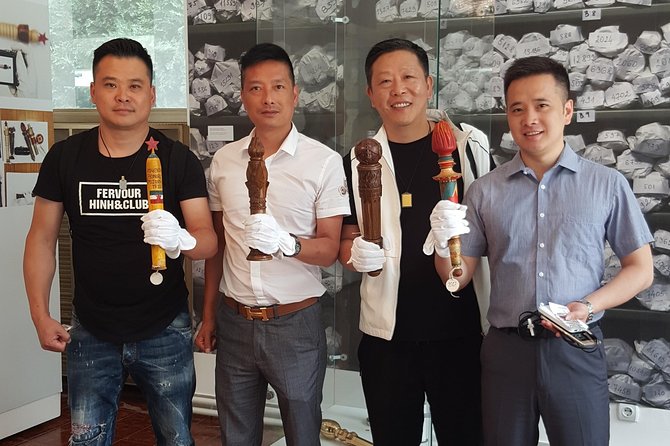
The tour ends at the House of Flowers, the mausoleum where Tito is buried. This final stop gives the experience a clear emotional and historical endpoint.
By the time you reach it, you have heard about the creation of Yugoslavia, public rituals, work, childhood, foreign influences, and the country’s position between major powers. The mausoleum then brings the focus back to the man who dominated much of that era.
The setting is not simply a memorial to one leader. It also raises questions about memory. Tito remains a figure of strong feeling, and nostalgia for the years of unity exists alongside criticism of the regime and the later wars.
You finish at the Museum of Yugoslavia complex rather than returning to central Belgrade. Plan your next activity with that in mind. The ending is useful for visitors who want to continue exploring the museum area, but less convenient if you need to return immediately to Republic Square.
How much walking should you expect?
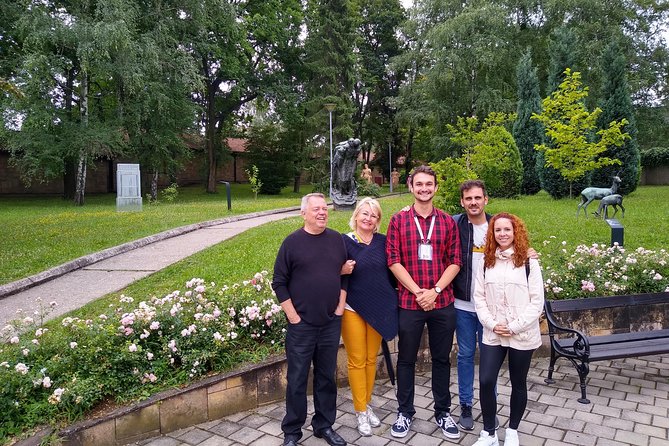
The tour lasts about four hours and combines walking, standing, museum time, and a trolley ride. The central portion takes you through several city locations, and one account specifically notes that the route is long and hilly.
Wear comfortable walking shoes. Bring water, especially in warm weather. There is no stated meal or scheduled refreshment stop, though one account suggests that a drink or rest break would improve the experience.
Most people can take part, but this is not a seated sightseeing tour. If you have limited stamina, ask about the private option before booking so the guide may be better able to respond to your needs.
The maximum group size is 25 people. That is not a tiny group, but it is manageable for a walking tour if the guide uses a clear meeting point and keeps the group together. Some departures may be much smaller. A group of six, for example, allows more room for questions and conversation.
Is $53.10 a fair price?
At $53.10 per person, the price is reasonable if you value interpretation and transport rather than only seeing monuments from the outside.
The cost includes an English-speaking guide, the trolley tickets, and entry to the Museum of Yugoslavia. You are paying for about four hours of organized history, not just a two-hour walk. The museum entry and guided route to Dedinje add practical value.
A private tour is available for people who want more control over the pace or have a particular interest in Tito, socialism, or the 1990s. A shared tour is the better budget choice, especially for solo visitors who want company.
There is one important rule for a shared departure. At least two passengers are required. If you are the only person booked, the operator will contact you no later than 24 hours before the tour and offer cancellation without a fee or a 75 percent supplement to run the tour privately.
That policy is worth understanding before you commit. It is not a surprise charge if the operator follows the stated procedure, but solo visitors should check messages before the departure date.
Who should book the Red Belgrade tour?
I would choose this tour if you want to understand Belgrade through the twentieth century rather than simply collect city sights. It suits visitors interested in Tito, socialism, the Cold War, political memory, architecture, public transport, and the breakup of Yugoslavia.
It is also a good first or second-day activity because it helps place many parts of the city in context. The guide may also point out bakeries, bookshops, and other local places during the walk, giving you useful orientation beyond the formal history.
You may want a different experience if you prefer a narrow focus on communist ideology, party structures, or military history. Despite its title, this tour spends substantial time on Serbia’s broader past and present.
One practical point deserves attention: the activity is offered in English, but one account describes confusion over language expectations on a departure. Confirm the language when booking, particularly if you are traveling with a mixed-language group.
Free cancellation is available up to 24 hours before the 10:00 am start time. Changes or cancellations inside that window are not accepted for a refund, and a departure can be changed or refunded if the minimum number is not met.
Should you book it?
Book the Red Belgrade Communist Tour if you want a guided explanation of how Yugoslavia shaped modern Belgrade. The strongest features are the capable individual guides, the useful trolley connection to Dedinje, and the included Museum of Yugoslavia visit.
Go in expecting a broad history lesson, not a strict four-hour study of communism. Bring water, wear good shoes, and leave room for serious questions. For most visitors interested in Serbia’s past and present, the combination of street-level detail and Tito’s museum makes this a strong-value introduction.
FAQ
Where does the Red Belgrade Communist Tour start?
It starts at Trg Republike 9 in Belgrade, Serbia.
What time does the tour begin?
The tour starts at 10:00 am.
Where does the tour end?
It ends at the House of Flowers within the Museum of Yugoslavia complex in Belgrade.
How long does the experience last?
The tour lasts approximately four hours.
Is the tour offered in English?
Yes. An English-speaking guide is included.
Is admission to the Museum of Yugoslavia included?
Yes. Entry to the Yugoslav History Museum is included in the price.
Is the trolley ride included?
Yes. Trolley tickets are included.
How many people can join the tour?
The maximum group size is 25 people.
What happens if I am the only person booked on a shared tour?
The operator will contact you at least 24 hours before the tour. You can cancel without a fee, or pay a 75 percent supplement for the tour to operate privately.
Can I cancel for a full refund?
Yes. You can cancel at least 24 hours before the experience begins for a full refund. Cancellations or changes made less than 24 hours before the start time are not refunded.
Just added around Belgrade
- Private Half Day Serbia Tour Novi Sad and Petrovaradin Fortress★ 5.0 · 3 reviews
- 3-Hour Belgrade Zemun Neighborhood Tour★ 5.0 · 8 reviews
- Private Belgrade Street Art and Adventures Walking Tour★ 5.0 · 4 reviews
- Urban & Alternative Belgrade tour★ 5.0 · 4 reviews
- Belgrade Bike Tour: Be a local in the hood of Belgrade!★ 5.0 · 5 reviews
- From Belgrade:Uvac Nature Reserve Tour★ 5.0 · 4 reviews
- Private Wine Tasting by Party in Belgrade★ 5.0 · 3 reviews
- Shooting Experience by Party in Belgrade★ 5.0 · 8 reviews
Communist & Yugoslav History Tours, compared.
Architecture of New Belgrade – Brutalism Decoded
Read our review →
Browse the lists this tour appears in