
Reviewed · SERBIAN WINE TOURS
Belgrade Underground Tour w/ Sparkling Wine Along the River
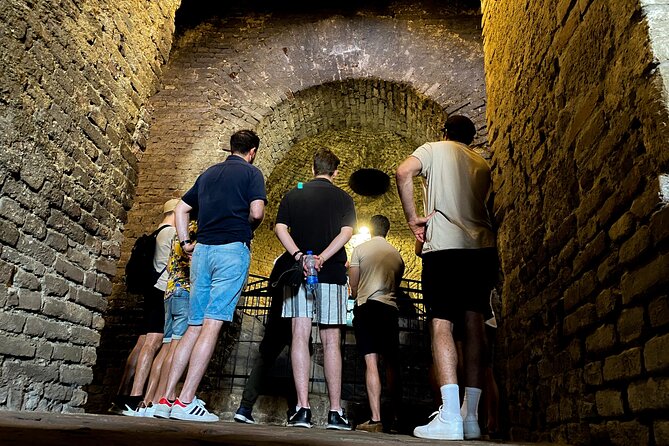
Belgrade keeps much of its past below street level. Beneath the fortress, you’ll enter a Roman-era hall, an Austrian gunpowder store, and a Cold War bunker tied to President Tito’s uneasy dealings with the great powers. The best guides, including Bojan, Darko, Kristina, and Novica, turn these bare rooms into a readable story of Belgrade.
I like the way the tour connects three very different periods in one compact walk, and I like the cool shelter of the tunnels on a hot day. The final drink beside the Sava is also a pleasant way to finish. The main caution is simple: this is not an entirely underground tour, and there are quite a few stairs. If you expect a long network of tunnels, the three main underground stops may feel limited.
Key points about Belgrade below the fortress
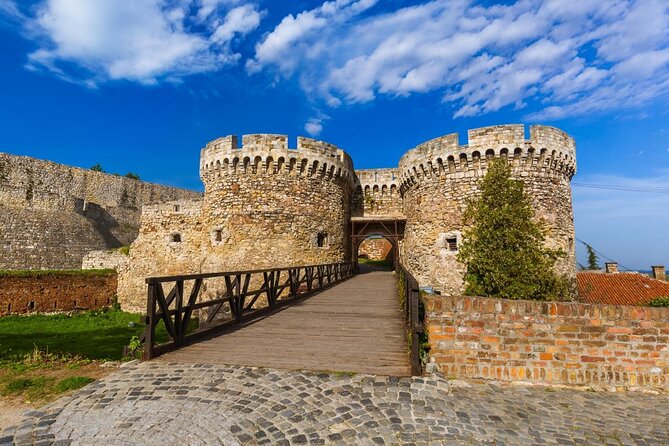
- Roman Well and Roman remains: See old stonework beneath Belgrade Fortress, including a well with an unusual connection to Alfred Hitchcock.
- Austrian gunpowder warehouse: Enter a fortress chamber built during Austria’s wars with the Ottoman Empire and view Roman and later Serbian archaeological pieces.
- Tito-era military bunker: Learn how Cold War politics shaped one of the fortress’s more secretive spaces.
- English-speaking local guides: Guides such as Bojan, Darko, Kristina, Novica, and Vladica are praised for clear explanations, humor, and patience.
- Riverside finish: End at Beton Hala with a glass of local wine or another drink, depending on what is available.
- Good value for a short history tour: At $35.09 per person, entrance fees, the guide, and a drink are included.
Why Belgrade Fortress is best understood from below
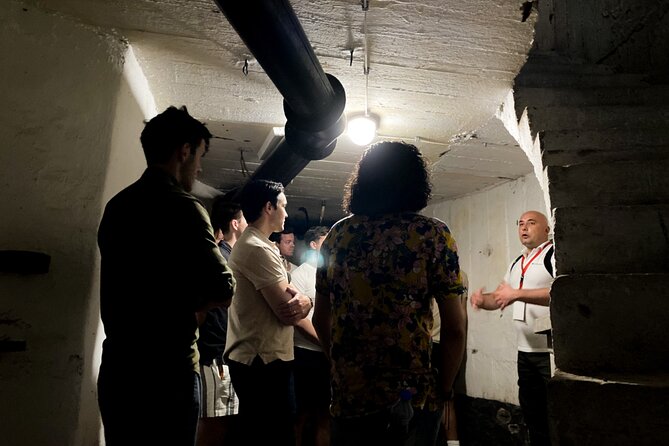
Belgrade Fortress is easy to admire from above. You get broad views toward the Sava and Danube, broad walls, open paths, and the sense that this has been a military site for a very long time.
The underground spaces explain why the fortress matters. Instead of seeing only walls and viewpoints, you follow the layers left by different rulers and military periods. Roman remains, Austrian construction, and a Yugoslav-era bunker all occupy the same general area, yet each space tells a very different story.
That variety is the tour’s main strength. You are not spending two hours in one cave system. You are moving between separate sites, with the guide supplying the links between them. The history reaches from Roman times to the Cold War, and the political background helps explain why Belgrade has been fought over and rebuilt so often.
The format suits anyone who wants more context than a quick walk around the fortress can provide. It also works well near the beginning of a Belgrade visit, since the guide can give you a framework for understanding the city. If you have already spent a full day exploring the fortress above ground, some parts may feel familiar.
More Belgrade wine days worth an afternoon:
- Private Novi Sad, Titanic wine tasting and Farmer’s House
★ 4.5 · 30 reviews - Private Wine Tour in Royal Region
★ 5.0 · 17 reviews - Novi Sad and Sremski Karlovci private tour with wine tasting
★ 5.0 · 9 reviews
The Roman Well and the fortress underworld
The first major stop is the Roman Well, though the structure itself is connected with the Austrian period and dates to the 18th century. That mix of names and dates is part of what makes the site interesting. The fortress has been altered repeatedly, so one label rarely tells the whole story.
You will hear about the mysteries connected with the well and its unusual place in Belgrade lore. The connection to Alfred Hitchcock gives the stop a memorable human detail. It is the sort of story that helps a plain stone shaft stick in your mind after the tour ends.
The Roman section also includes a hall and archaeological remains found under or around the fortress. These pieces show that the underground areas are not simply military storage rooms. They also preserve evidence of earlier settlements and older religious or civic life.
This is a stop where your guide matters a great deal. Bojan, Darko, and other guides are praised for answering questions and adding personal insight rather than delivering a dry list of dates. A clear English explanation is especially useful here, because the architecture alone does not always make its purpose obvious.
Do not expect a vast Roman ruin complex. The attraction is the combination of setting, stories, and surviving fragments. It is a compact stop, but it gives the rest of the tour a strong beginning.
The Austrian gunpowder warehouse
The gunpowder warehouse is the most atmospheric of the three underground locations. The Austrians built it as part of the fortress defenses during their wars with the Ottoman Empire. The room’s heavy walls make the military purpose easy to understand, even before the guide explains the wider conflict.
One appealing feature is that you can touch the stone walls. That small detail gives the place a physical quality that a museum display cannot match. You are standing inside a working defensive structure, not merely looking at a model or a reconstructed scene.
The warehouse also serves as an exhibition space. You can see sarcophaguses, altars, and other archaeological pieces gathered from sites across Serbia. This adds another layer to the visit, since the room shifts from military storehouse to a display of older religious and funerary objects.
I find this contrast especially effective. A building made for gunpowder now holds evidence of Roman and later cultures. The guide can connect the objects with the wider story of Serbia, while the rough chamber provides the setting.
The drawback is that people who want extensive underground exploration may find the stop brief. You visit a few distinct spaces rather than a sprawling maze. The reward comes from the quality of the explanation and the unexpected mix of military architecture and archaeology.
The Tito-era bunker and Cold War politics
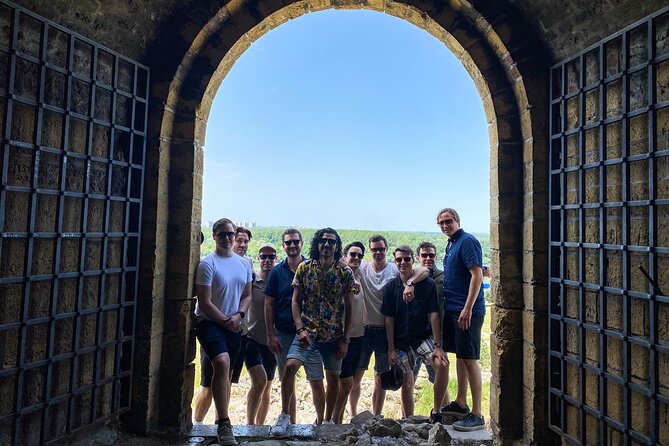
The third major stop is a military bunker from the period after the Second World War, during President Tito’s rule and the Cold War. Here the subject shifts from ancient and imperial history to modern political tension.
The bunker is valuable because it gives physical form to a period that can otherwise feel abstract. The guide explains Tito’s political maneuvering between major powers, which places the bunker in the setting of Yugoslavia’s difficult position during the Cold War.
This section may appeal most to people who enjoy political history. The room itself is not presented as a grand monument. Its interest comes from what it represents: secrecy, military planning, and a state trying to protect its position in a divided world.
Your guide’s storytelling style matters again. Novica is praised for keeping a long explanation lively, while Bojan is often singled out for clear and well-organized delivery. Darko and other guides are also noted for a friendly manner and a willingness to answer questions.
The bunker is also a practical reason to book the tour in warmer weather. Several sections provide relief from the heat, and one particularly hot-day experience remained comfortable because the guide kept the pace and moved the group into the cooler underground rooms. You should still expect walking outside between stops.
A few more Belgrade half-days to weigh up
- Northern Serbia: Sremski Karlovci and Novi Sad Full-Day Tour from Belgrade
★ 5.0 · 425 reviews - Day Trip from Belgrade: Gems of Eastern Serbia
★ 5.0 · 424 reviews - Belgrade Nightlife Bar Pub Club Crawl with Drinks
★ 5.0 · 277 reviews - Taxi to/from Belgrade Airport to/from Belgrade City Center
★ 5.0 · 241 reviews
It is not underground from start to finish
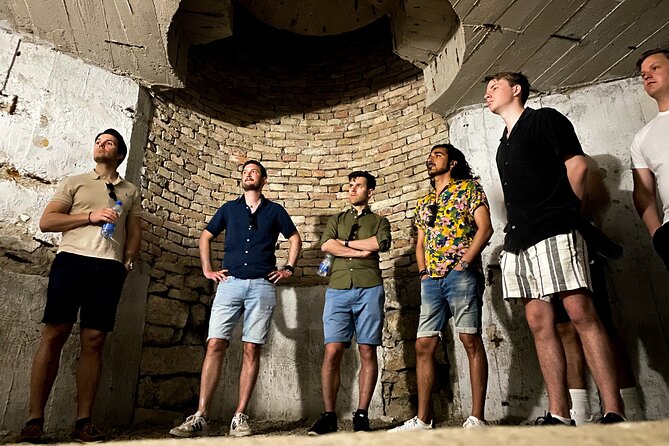
The name can create the wrong expectation. This is an underground-focused walking tour, not a continuous subterranean route. You spend time walking around the fortress and its surrounding paths, then enter three main underground areas.
That above-ground time is not wasted. It provides views of the Sava and Danube and lets the guide explain how the fortress fits into Belgrade’s geography. Still, if you have already examined every major path and wall on a previous visit, the outdoor sections may feel less new.
You should also plan for stairs. Most people can take part, but one person using crutches was able to see only the Roman Well because the other locations were harder to reach. Anyone with limited mobility should contact the operator before booking and should not assume that every part of the route is accessible.
Wear shoes suited to ordinary city walking and steps. The supplied information does not specify a special clothing requirement, but the route combines outdoor walking with old underground spaces, so practical footwear makes sense.
The group can reach a maximum of 40 people. That is a fairly large possible group for enclosed rooms, though the actual size may be smaller. If you want the guide’s voice and explanations to be easy to follow, pay attention to the group size offered for your date.
The English-speaking guides make the difference
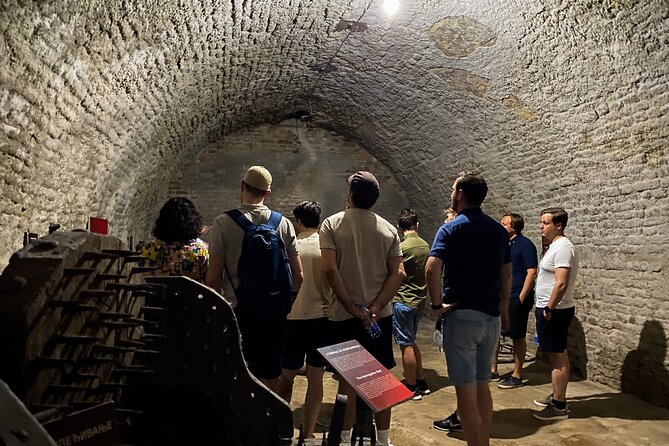
The strongest part of this experience is the human delivery. The sites are interesting, but they are not self-explanatory. A bare bunker is just a bare bunker until someone explains the political stakes. A stone well becomes memorable when you hear its stories and its place in Belgrade folklore.
Several guides have received especially warm praise. Bojan is noted for a large store of historical information, an engaging sense of humor, and concise explanations. Darko is described as friendly and responsive, with a good flow between the stops. Kristina is praised for a strong tour, while Novica is remembered for being funny and energetic even in hot weather. Vladica has also led enjoyable tours for larger private groups.
Guide assignments can vary, so you should not book on the assumption that one named guide is guaranteed unless the operator confirms it. The important point is that the experience depends on having a guide who can explain the political and architectural background in clear English.
The format also leaves room for questions. That matters in Serbia, where recent political history can be complex and where the same fortress has served very different powers. You can ask about the Roman remains, Austrian defenses, Tito, or the city’s wider past without having to piece everything together alone.
The walk to Beton Hala and the final drink
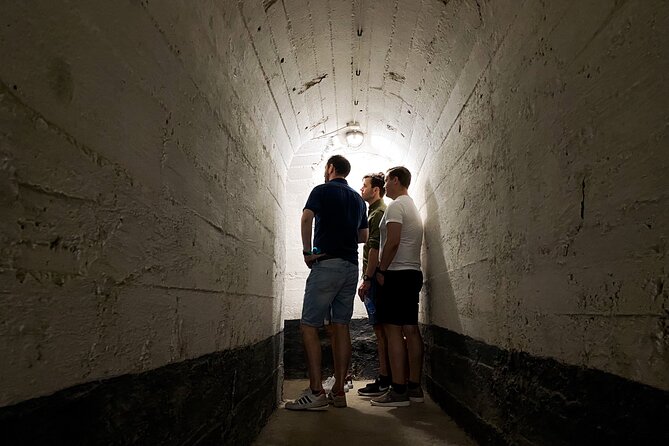
The tour ends at Beton Hala, on Karađorđeva Street beside the Sava. The drink is included, described as a glass of local wine or sparkling wine, and alcoholic beverages are covered in the tour price.
This ending changes the mood nicely. After old stone rooms and military stories, you finish in a modern riverside setting. The views toward the river provide a relaxed final pause, and the drink gives you time to ask the guide for restaurant or city suggestions.
You should keep your expectations realistic. This is not an old Serbian tavern experience. The final venue is a modern bar or restaurant along the river, and one account preferred a more traditional setting. Another person found that the wine available was not Serbian, despite expecting a local wine. You may have other drink choices, including cocktails or non-wine options, but the exact beverage selection can depend on the venue.
The operator describes the restaurant as Michelin recommended, but the key practical point is the location and atmosphere: you finish in a contemporary dining area near the water, not inside the fortress. If local wine is important to you, ask what is being served before you book or at the start of the tour.
Is $35.09 a fair price?
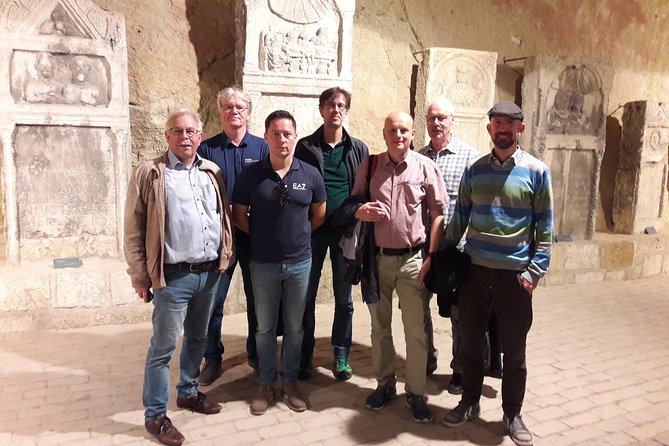
At $35.09 per person, the tour is fairly priced if you want a guided look at places you would probably not find on your own. Entrance fees, an English-speaking professional guide, and the final drink are included.
The value comes from access and interpretation rather than from the number of stops. You see three principal underground sites in roughly two to two and a half hours. That is enough for a focused introduction, but not enough for an exhaustive study of Belgrade Fortress.
For comparison within your own planning, think of it as a specialist fortress tour with a drink, not as a full-day city tour. If you already have a general Belgrade walking tour booked, this can add a different angle. If you have only one short block of time in the city, the fortress views and historical setting make the tour useful, but you will not see every major Belgrade sight.
The tour is often booked about 24 days ahead, which suggests that reserving early may be sensible for a particular date. Group discounts are available, and shared departures require at least four people. If that minimum is not met, you can be offered another date or cancel without a fee.
Who should book this fortress tour?
I would recommend it to you if you enjoy military history, archaeology, political stories, and places that are easy to miss without a guide. It is also a good choice for anyone who wants to understand why the fortress has so many layers rather than simply photographing its walls.
It suits first-time visitors who want an introduction to Belgrade’s long past, as well as people familiar with the city who want a less obvious angle. One person who already knew Belgrade well still found Bojan’s presentation full of fresh information.
You may want to skip it if you expect a large cave network, a fully underground experience, or dramatic ruins at every stop. The route includes outdoor walking, stairs, and only three main underground areas. People with serious mobility limits should check the route before paying.
Practical details before you book
The meeting point is at Osnovna škola Kralj Petar I, Kralja Petra 7, in Belgrade. The tour ends at Beton Hala, Karađorđeva 2, so you finish in a different part of the city rather than returning to the start.
No transport between attractions is included. You need to make your own way to the meeting point and arrange your onward journey from Beton Hala. Both points are near public transport, which makes the one-way route manageable.
The advertised duration is about two hours and 30 minutes, while the detailed timing also describes a two-hour visit. I would allow the full two and a half hours so you are not rushed afterward.
Free cancellation is available up to 24 hours before the start time. Changes or cancellations within 24 hours are not refunded. Poor weather or failure to reach the minimum group size can lead to a changed date or a full refund.
Should you book it?
Book this tour if you want a compact, well-explained look at Belgrade’s underground military and archaeological sites, especially if you appreciate a guide who can connect Roman remains with Austrian warfare and Tito-era politics.
Skip it if the word underground makes you picture hours of tunnels. You will visit three main subterranean locations and spend part of the time above ground. For most people who accept that format, the price is reasonable, the guides add real value, and the riverside drink is a pleasant finish. Just confirm the wine choice and consider the stairs before booking.
FAQ
How long does the Belgrade Underground Tour last?
The experience is advertised as approximately two hours and 30 minutes. The detailed timing also refers to a two-hour tour, so you should allow up to two and a half hours.
What is the price of the tour?
The listed price is $35.09 per person. Group discounts are available.
What language is the tour offered in?
The tour is offered in English.
Where does the tour start and finish?
It starts at Osnovna škola Kralj Petar I, Kralja Petra 7, Belgrade. It ends at Beton Hala, Karađorđeva 2, beside the Sava River.
What is included in the price?
A professional guide, entrance fees, and one alcoholic drink, described as a glass of local wine or sparkling wine, are included. Transport to and from the attractions is not included.
Can people with limited mobility take part?
Most people can participate, but the tour includes stairs and underground areas. Someone using crutches was able to visit only the Roman Well, so you should check the route with the operator if mobility is a concern.
What happens if the tour is canceled or I need to cancel?
You can cancel up to 24 hours before the start time for a full refund. Bad weather or failure to meet the minimum of four people may result in another date, another experience, or a full refund.
Just added around Belgrade
- Private Half Day Serbia Tour Novi Sad and Petrovaradin Fortress★ 5.0 · 3 reviews
- 3-Hour Belgrade Zemun Neighborhood Tour★ 5.0 · 8 reviews
- Private Belgrade Street Art and Adventures Walking Tour★ 5.0 · 4 reviews
- Urban & Alternative Belgrade tour★ 5.0 · 4 reviews
- Belgrade Bike Tour: Be a local in the hood of Belgrade!★ 5.0 · 5 reviews
- From Belgrade:Uvac Nature Reserve Tour★ 5.0 · 4 reviews
- Private Wine Tasting by Party in Belgrade★ 5.0 · 3 reviews
- Shooting Experience by Party in Belgrade★ 5.0 · 8 reviews
Serbian Wine Tours, compared.
Private Novi Sad, Titanic wine tasting and Farmer’s House
Read our review →
Novi Sad and Sremski Karlovci private tour with wine tasting
Read our review →
Novi Sad and Sremski Karlovci Wine Tour From Belgrade
Read our review →
Full-Day Private Royal Heritage Tour to Oplenac With a Winery Visit
Read our review →Browse the lists this tour appears in